
Mechanical Traction in Frisco, TX
Gentle spinal decompression to ease disc and nerve pressure.
Mechanical traction is a gentle stretch applied to your neck or lower back while you lie on a padded table. It is designed to unload compressed discs and calm irritated nerves — a source of back pain, sciatica, and radiating arm or leg symptoms. At our Frisco clinic, traction is never a stand-alone treatment; it is part of a complete plan built around your diagnosis.
West Frisco: (469) 797-0199
What Is Mechanical Traction Therapy?
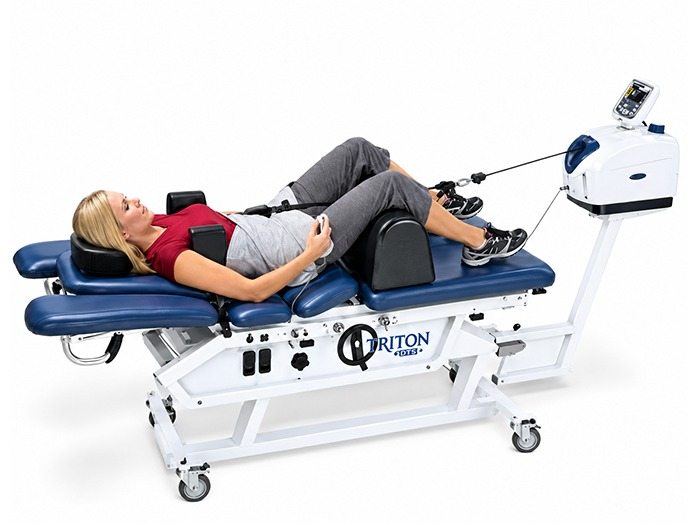
Mechanical traction uses a motorized table or harness system to apply a steady, adjustable pull to a segment of your spine. The force is split between your trunk and pelvis — or shoulders and head, for the neck — and delivered in controlled cycles you can interrupt at any time. The theory is simple: separating the vertebral spaces slightly can reduce pressure on a bulging disc and give an irritated nerve root room to settle, while the supporting muscles are encouraged to relax instead of bracing. Most people feel a mild stretch and little else.
Your therapist first screens you to confirm traction suits your diagnosis — it works best for certain disc bulges, degenerative changes, and nerve root irritation, and not for every kind of back pain. Once you are cleared, straps are secured over your pelvis and ribcage, the table is tilted to target the right level, and the pull is ramped up gradually while you remain fully clothed and relaxed. Sessions usually run fifteen to twenty minutes, and your therapist stays close, adjusting the angle or force based on how you respond.
Conditions We Treat with Mechanical Traction
Our physical therapists in Frisco address these common mobility and pain challenges:
Your Treatment Journey
What to Expect in Your Sessions
Your first visit is an evaluation, not a traction session: your therapist reviews your imaging if you have it, tests nerve tension, strength, and reflexes, and confirms traction is appropriate. If it is, treatment begins the same day. You lie clothed on the table while gentle straps are secured and the pull begins slowly — most people describe it as a mild stretch or a feeling of space in the low back. You simply relax for fifteen to twenty minutes. Afterward, your therapist adds a small movement or exercise to reinforce what the session created. Nothing about it is loud or intense, and you can stop the table with a hand control at any point.
How Many Visits Will I Need?
Mechanical traction in Frisco is typically scheduled once or twice a week for three to four weeks, often alongside two other weekly visits for exercise and manual care. Your therapist re-tests your symptoms and nerve signs at regular intervals; if traction is not changing anything after several sessions, we stop it and adjust the plan rather than continuing out of habit. We accept most insurance plans and verify your benefits before your first appointment so you know the cost upfront.
Who Is It Not For?
Mechanical traction is not appropriate with an unstable fracture, spinal instability that has not been cleared, a recent dislocation, or certain advanced osteoporosis. We also avoid it with cauda equina symptoms — sudden numbness in the groin or inner thighs, or loss of bladder and bowel control — which need emergency care. Inflammatory arthritis that affects the spine and some post-surgical fusions require your surgeon’s approval first. When in doubt, call the clinic and describe your symptoms; we will tell you honestly whether traction fits.
“Traction works best as a window, not a cure: it can settle a hot, irritated nerve enough that you tolerate exercise — and exercise is what keeps the disc and supporting muscles healthy after the table is wheeled away.”
Dr. Tanya Krishna Mudireddy, PT, DPTFounder & Lead Physical Therapist, Theramax Rehabs
Why Choose Us for Mechanical Traction?
Safe and Controlled Treatment
The pull starts gently, stays within your comfort, and can be stopped instantly whenever you choose.
Comprehensive Spine Care
Traction is combined with exercise, manual therapy, and posture work rather than used as a stand-alone fix.
Personalized Treatment Plans
Angle, force, and duration are matched to your level, diagnosis, and how your symptoms respond.
Return to Function
The goal is getting you back to sitting, lifting, and sleeping comfortably — not depending on the table.
Frequently Asked Questions
The traction portion itself runs about fifteen to twenty minutes, and a full appointment including evaluation or exercise usually takes forty-five to sixty minutes. Early sessions may start shorter while we find the right angle and force. Your therapist adjusts the setup based on how your symptoms respond after each visit.
Medically reviewed by Dr. Tanya Krishna Mudireddy, PT, DPT, founder of Theramax Rehabs. Learn more on our About Us page.
Take the First Step Toward Recovery
Start a personalized recovery plan with the Theramax team.
Open Monday–Friday 9:00 AM – 6:00 PM • Saturday Appointments Available 9:00 AM – 2:00 PM