
Neurological Care in Frisco, TX
Targeted rehabilitation for balance, movement, and independence.
A stroke, a Parkinson’s diagnosis, multiple sclerosis, or neuropathy can change how you walk, balance, and manage daily tasks — often all at once. Our neurological care program in Frisco, TX starts with a detailed movement assessment and a plan built around the activities that matter to you, with repetition at its core.
West Frisco: (469) 797-0199
What Is Neurological Care?
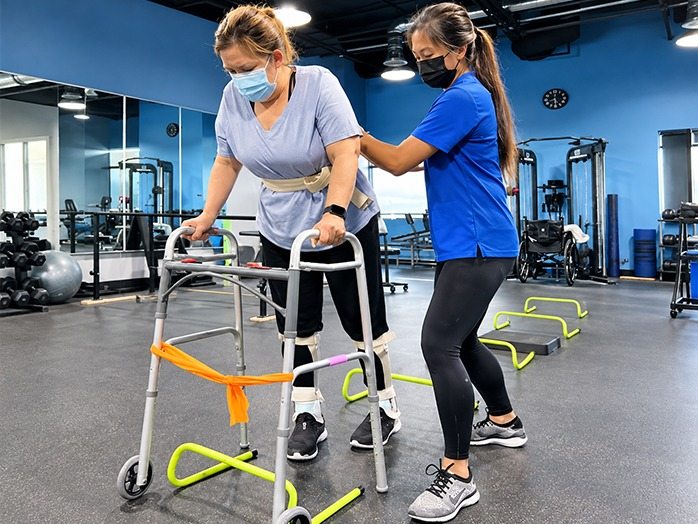
Neurological care is physical therapy for conditions affecting the brain, spinal cord, and nerves. After a stroke or with a progressive condition like Parkinson’s disease, movement patterns change: stride shortens, balance reactions slow, and strength fades on one side or throughout the body. Neurological rehabilitation works with the nervous system rather than around it — using guided repetition, specific task practice, and sensory feedback to help the brain and body rebuild the coordination that everyday movement requires. The goal is not simply to exercise the weak side, but to retrain how the brain plans and controls movement.
Your therapist breaks big goals into the small components underneath them: standing up from a chair, turning in bed, reaching for a shelf, stepping over a curb. Sessions combine strengthening with balance work, walking practice with cueing strategies such as rhythm or visual targets, and hands-on guidance that keeps movement patterns correct. Because change in the nervous system depends on repetition, we teach a short daily home program you or a family member can continue — and we coordinate with your neurologist to keep the plan aligned.
Conditions We Treat with Neurological Care
Our physical therapists in Frisco address these common mobility and pain challenges:
Your Treatment Journey
What to Expect in Your Sessions
Your first session starts with a close look at how your condition shows up in movement: how you stand up, turn, reach, and walk a short distance, along with strength, balance, and sensation testing where needed. We then set two or three concrete goals in your own words — getting up from the sofa without help, walking to the mailbox, finishing a grocery trip. Treatment itself is active: guided repetition of those tasks, strength and balance exercises, and built-in rest. Sessions are one-on-one with the same therapist where possible, and you leave with a short practice plan you can repeat at home between visits.
How Many Visits Will I Need?
Neurological rehabilitation is steady work, so most patients begin with two visits a week for six to eight weeks, then step down as home practice carries more of the load. There is no fixed finish line: we re-test walking, balance, and function every few weeks and adjust the plan as you progress or as your condition changes. If your diagnosis is progressive, therapy may return periodically for tune-ups rather than ending. Most insurance plans are accepted and verified before your first appointment.
Who Is It Not For?
Neurological care is not appropriate during an unstable medical period — shortly after a stroke with uncontrolled blood pressure, during an active multiple sclerosis flare with brand-new symptoms, or with an unhealed fracture or surgical site. Medication changes, repeated dizziness, and falls that need urgent medical review come first. If you are unsure where you stand medically, call the clinic and describe your diagnosis and current symptoms; we will tell you honestly whether starting therapy now is safe.
“Recovery after a stroke is not about one heroic session — it is about correct repetition. The nervous system learns like any skill: the right movement, practiced often, with feedback. That is why I keep home programs short enough to repeat alone.”
Dr. Tanya Krishna Mudireddy, PT, DPTFounder & Lead Physical Therapist, Theramax Rehabs
Why Choose Us for Neurological Care?
Neuroplasticity-Based Repetition
High-repetition, task-specific practice that retrains movement patterns through the nervous system’s ability to reorganize and adapt.
Balance and Gait Training
Walking, stepping, and reactive balance drills that rebuild stability in the places you actually move.
Strength and Transfer Work
Targeted strengthening plus sit-to-stand and bed-mobility practice that restores independence with everyday transfers and self-care.
Care Team Coordination
We share progress and precautions with your neurologist so therapy stays aligned with your medical care.
Frequently Asked Questions
Progress after a stroke or neurological injury is measured in months rather than weeks, with noticeable changes often appearing over six to eight weeks of consistent practice. We set functional milestones — standing without assistance, walking a set distance, climbing steps — and re-test them regularly, so the pace of your recovery is tracked rather than guessed at.
Medically reviewed by Dr. Tanya Krishna Mudireddy, PT, DPT, founder of Theramax Rehabs. Learn more on our About Us page.
Take the First Step Toward Recovery
Start a personalized recovery plan with the Theramax team.
Open Monday–Friday 9:00 AM – 6:00 PM • Saturday Appointments Available 9:00 AM – 2:00 PM